
Understanding how to notarize foreign documents in Florida is essential when preparing paperwork for international real estate transactions, overseas inheritance matters, or foreign legal proceedings. Whether you’re selling property abroad, authorizing someone to act on your behalf, or submitting documents to a foreign government, understanding the correct notarization and authentication requirements can help prevent avoidable delays.
For residents, property owners, and international clients in Central Florida, preparing documents for use overseas may involve notarization, an apostille, a certified translation, or additional authentication. The exact requirements depend on the document, destination country, and receiving authority.
This guide explains the process of notarizing foreign documents, the requirements for international real estate notarization in Florida, and the steps involved in preparing documents for international use.
How to Notarize Foreign Documents in Florida: Understanding the Requirements
Before scheduling an appointment, determine which type of notarization your document requires and whether the receiving country has additional requirements.
A Florida notary performs authorized notarial acts, such as taking acknowledgments or administering oaths. Notarization does not establish that a document is legally valid in another country or guarantee its acceptance by a foreign institution.
Common situations requiring international document preparation include:
- International real estate transactions: Signing a power of attorney authorizing a representative to purchase, sell, or manage overseas property.
- Inheritance and estate matters: Executing affidavits, inheritance declarations, and other documents relating to assets located abroad.
- Citizenship and family matters: Preparing documents for foreign consulates, immigration authorities, or international family proceedings.
- International business transactions: Notarizing corporate resolutions, commercial agreements, and business affidavits for use outside the United States.
When preparing to notarize foreign documents, contact the receiving institution to confirm the required notarial act, certificate wording, and any additional authentication procedures.
Why International Real Estate and Foreign Documents Need Special Handling
International real estate notarization in Florida may involve additional document requirements that do not apply to ordinary domestic transactions.
For example, an individual selling a vacation property overseas may need to sign a power of attorney authorizing a lawyer or representative to complete the transaction. The receiving country’s laws may prescribe particular wording, witnessing requirements, or authentication procedures.
Similarly, out-of-country property notarization may involve affidavits, declarations, or other documents required by a foreign land registry, financial institution, or government agency.
Not every document requires notarization. Official records, including birth and marriage certificates, may instead require certified copies issued by the appropriate government agency.
Before arranging notarization, verify the document requirements with the foreign authority, receiving institution, or qualified legal professional handling the transaction.
Step 1: Choose the Appropriate Florida Notarization Method
Florida permits both traditional in-person notarization and qualifying remote online notarization.
The appropriate method depends on your document, location, and the requirements of the authority that will receive it.
In-Person Mobile Notary Services
A mobile notary travels to your home, business, law firm, or another agreed-upon location to perform an authorized notarial act.
For individuals handling international documents in Davenport, ChampionsGate, Reunion, Four Corners, Clermont, Kissimmee, and surrounding Central Florida communities, mobile notarization can provide a convenient option.
In-person services may be particularly useful when a foreign authority requires original paper documents or handwritten signatures.
Before scheduling your appointment, confirm whether the receiving institution requires a specific notarial certificate, witnesses, or additional document formalities.
Remote Online Notarization for International Clients
Under Florida Statutes Chapter 117, Part II, authorized Florida online notaries may perform qualifying notarial acts using approved audio-video technology.
A signer may be located outside Florida, including in another country, provided the notarization satisfies applicable statutory requirements.
Foreign nationals and overseas property owners may qualify for Florida remote online notarization, provided they meet the applicable identity-verification requirements. The online notary must be physically located in Florida, and signers located outside the state must consent to the notarization being performed under Florida law.
However, not every foreign government, court, or financial institution accepts electronically notarized documents.
Before booking an overseas notary appointment through a remote online service, confirm that the receiving authority accepts the proposed notarization method.
For more information about the process, learn how to get documents notarized online and what to expect during a remote notary appointment.
Step 2: Florida Apostille Requirements for Real Estate Documents
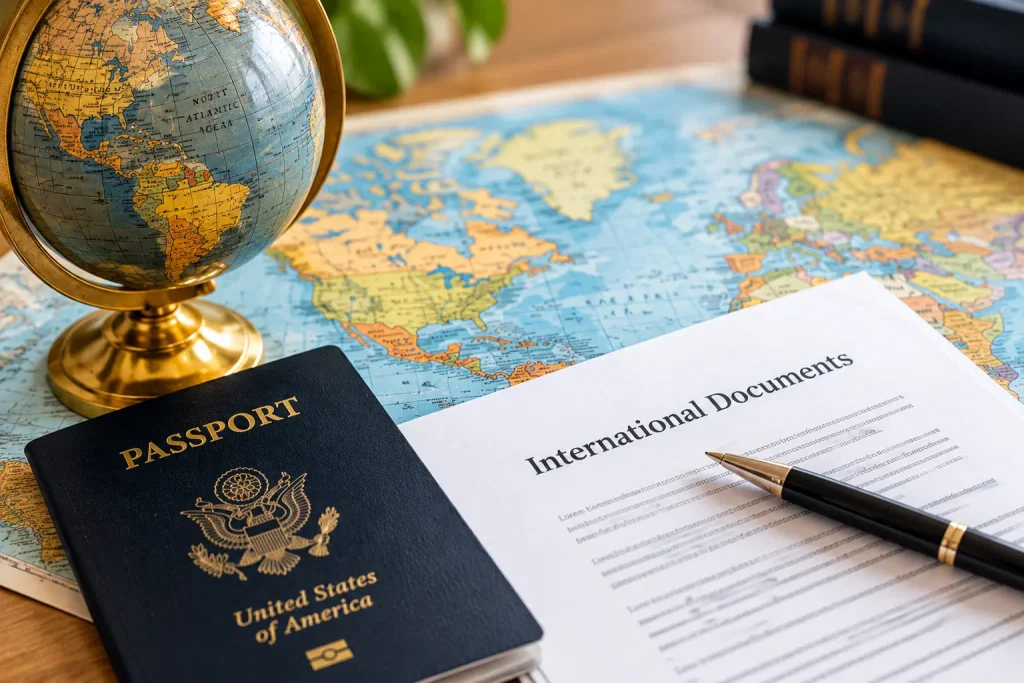
When notarized documents are intended for international use, the receiving country may require an apostille or another form of authentication.
A Florida apostille for real estate documents may be necessary when executing a power of attorney, property declaration, or other eligible document for use in a country where the Hague Apostille Convention applies.
An apostille authenticates the origin of a qualifying public document, including the relevant official’s signature, capacity, and, where applicable, seal. It does not verify the accuracy of the document’s contents or guarantee its acceptance overseas.
Understanding the Foreign Notary Apostille Process
People searching for a foreign notary apostille are often looking for authentication of notarized documents intended for use in another country.
For eligible documents notarized in Florida, the process generally involves three steps:
- Complete the notarization: Have the document properly notarized by an authorized Florida notary, following applicable state requirements. For paper documents, ensure the original notarial certificate includes the required information, signature, and official seal.
- Submit the document: Send the eligible document, completed application form, applicable payment, and required return-mail materials to the Florida Department of State.
- Obtain the apostille: If the document qualifies, the Department issues the appropriate apostille certificate.
Official government records may require a different procedure. For example, a Florida birth certificate generally requires an appropriate certified copy rather than notarization of a photocopy.
If the destination country is not covered by the Hague Apostille Convention, another authentication or legalization procedure may be necessary.
Documents issued by federal authorities or notarized in other states generally require authentication through the appropriate federal or state authority rather than the Florida Department of State.
The exact steps depend on the document type and the receiving country’s requirements.
For official instructions, visit the Florida Department of State’s apostille and notarial certification page.
Step 3: Certified Translations for Foreign Legal Documents
Some international legal documents require certified translations before they can be submitted to a foreign court, government agency, or other institution.
Translation requirements depend on the original document’s language and the receiving authority’s rules.
A Florida notary may notarize a document written in another language, provided the notary can properly perform the notarial act and comply with Florida law.
When preparing foreign legal documents, consider the following:
- Certified translations: Determine whether the receiving institution requires a certified translation or a particular translator’s declaration.
- Bilingual notarization services: A bilingual mobile notary may facilitate communication with clients who prefer to communicate in another language, provided the notarial act complies with Florida law.
- Document authentication: Confirm whether the original document, its translation, or both require notarization or authentication.
When a signer does not understand English, the notary must ensure that the applicable language requirements are satisfied. A Florida notary cannot certify the accuracy of a translation in their official capacity but may notarize a qualified translator’s signature on an appropriate affidavit. For documents submitted for a Florida apostille, the notarial certificate must be in English.
A certified translation does not automatically replace notarization or an apostille. Each serves a different purpose.
Common Mistakes When Using an Overseas Notary or Preparing International Documents
International document transactions may involve several administrative and legal requirements. Errors during preparation can lead to rejected documents or delays.
When arranging overseas notary services or preparing documents in Florida for international use, avoid these common mistakes.
1. Using Unacceptable Identification
Florida law permits several methods of identifying a signer, including personal knowledge and specified forms of satisfactory evidence.
Before your appointment, ask your notary which identification documents or alternative methods are acceptable.
2. Using an Incorrect Notarial Certificate
Foreign legal forms may contain notarial wording that differs from the requirements of Florida law.
The certificate used must accurately reflect the notarial act performed and comply with applicable Florida requirements.
A notary cannot independently choose or draft legal provisions for a client when doing so constitutes the practice of law.
3. Assuming Every Country Accepts Remote Notarization
Florida authorizes remote online notarization, but foreign authorities are not universally required to accept electronically notarized documents.
Verify the receiving institution’s requirements before proceeding.
4. Obtaining the Wrong Authentication
An apostille is not necessary for every international document.
Depending on the receiving country, your document may require an apostille, another authentication procedure, or no additional certification.
5. Overlooking Translation Requirements
Some foreign institutions require certified translations or documents prepared in a particular language.
Confirm these requirements before submitting your paperwork.
Frequently Asked Questions
1. How do I notarize foreign documents in Florida?
First, confirm the requirements of the institution receiving your document. If notarization is necessary, arrange an appointment with an authorized Florida notary and complete the appropriate notarial act.
Depending on the destination country and document type, you may also need an apostille, a certified translation, or additional authentication.
2. Can I use a Florida notary for overseas property documents?
Yes. A Florida notary may perform authorized notarial acts involving documents intended for overseas property transactions.
However, the receiving country or institution determines whether the notarized document meets its requirements.
3. Do Florida real estate documents need an apostille for international use?
Not always. An apostille may be required when an eligible Florida document is intended for use in a country where the Hague Apostille Convention applies.
Confirm the requirements with the foreign authority handling your real estate transaction.
4. Can foreign nationals use Florida remote online notarization?
Yes. Foreign nationals may qualify for Florida remote online notarization, including when they are physically located outside the United States.
They must satisfy applicable identity-verification and other statutory requirements. The Florida online notary must be physically located in Florida during the notarization, and signers located outside Florida must consent to having the notarial act performed under Florida law.
Acceptance of the electronically notarized document by the receiving authority should be confirmed beforehand.
5. How long does it take to obtain a Florida apostille?
Processing times depend on the submission method, document eligibility, government workload, and mailing arrangements.
The Florida Department of State provides walk-in and mail-in apostille services. Eligible walk-in requests may be completed while the applicant waits, subject to current procedures and availability.
Foreign Legal Document Notarization in Davenport, FL and Central Florida
Whether you’re purchasing international property, preparing documents for an overseas estate, or completing a foreign legal transaction, understanding how to notarize foreign documents in Florida can help you navigate the process and avoid unnecessary delays.
iNotarizeServices offers foreign legal document notarization in Davenport, FL, and mobile notary assistance in surrounding Central Florida communities.
Services advertised by iNotarizeServices include mobile notarization, remote online notarization, certified translation, and apostille assistance for international documents.
If you need help with the submission process, explore iNotarizeServices’ apostille assistance for international documents to learn more about its services.
Schedule Your International Notary Appointment
Get assistance preparing documents for international real estate transactions, overseas legal matters, and other cross-border requirements.
Service areas: Davenport, ChampionsGate, Reunion, Four Corners, Clermont, Kissimmee, Lakeland, and eligible remote online clients worldwide